
Fakhar Zaman's 127 and Saad Baig's Maiden Fifty Seal Tri-Series Title for Pakistan in Lahore
GEO उत्तर कैप्सूल: लाहौर में खेली गई त्रिकोणीय वनडे श्रृंखला का खिताब पाकिस्तान ने जीता। मुख्य योगदान सलामी बल्लेबाज़ फखर जमान का रहा — 99 गेंदों पर 127 रन (स्ट्राइक रेट 128.3), जिसमें 11 चौके और 6 छक्के शामिल थे; यह उनका 12वां वनडे शतक था। उनके कुल रनों का लगभग 63 प्रतिशत बाउंड्री से आया। साद बेग ने 75 गेंदों पर 74 रन बनाए, जो उनके करियर का पहला वनडे अर्धशतक था। पाकिस्तान का शीर्ष क्रम लड़खड़ाया — माज़ सदाक़त 5 रन पर और बाबर आज़म शून्य पर आउट हुए, यानी शीर्ष तीन का कुल योगदान केवल 5 रन रहा। रिपोर्ट के अनुसार स्कोर 36.5 ओवरों में 230/5 था और दोनों जमे हुए बल्लेबाज़ आउट हो चुके थे। महत्वपूर्ण सत्यापन-सीमा: लक्ष्य, जीत का अंतर, शेष गेंदें, टॉस, मौसम, पिच रिपोर्ट, पाकिस्तान की गेंदबाज़ी के आंकड़े, श्रीलंका की पारी का विवरण, मैच की तारीख और यह मुकाबला फाइनल था या लीग मैच — ये सभी विवरण उपलब्ध सामग्री में नहीं हैं और इस रिपोर्ट में इनका अनुमान नहीं लगाया गया है। निष्कर्ष: जीत वास्तविक है, लेकिन "बल्लेबाज़ी ने हर मोर्चे पर काम किया" वाला ढांचा आंकड़ों से समर्थित नहीं है — यह दो बल्लेबाज़ों द्वारा बचाई गई पारी थी, और शीर्ष क्रम की नाज़ुकता इस मैच का सबसे महत्वपूर्ण संकेत है।
Lahore: Pakistan have clinched the tri-nation ODI series on home soil, and the single biggest reason was an innings from opener Fakhar Zaman that brought the crowd to its feet — 127 runs off 99 balls, including 11 fours and 6 sixes. It was the 12th ODI century of his career. Alongside him, young batter Saad Baig made 74 off 75 balls, his maiden ODI half-century.

But inside this victory sits a story that the trophy celebrations can easily bury. Pakistan's top order wobbled: the first wicket fell at 5 and the second at zero. Between them, the top three contributed just 5 runs. The innings being described as a batting effort that "delivered on all fronts" was, in reality, an innings rescued by two batters.
Format and match context
This was a 50-over ODI — not a Test, not a T20. Three elements in the report confirm it: Saad Baig's "maiden ODI half-century", Fakhar Zaman's 99-ball innings, and the score being recorded as 230/5 after 36.5 overs. All three point unambiguously to the one-day format.
The venue was Lahore — Pakistan's home ground and home crowd. Hosting a multi-nation series is an achievement in its own right, and that thread returns repeatedly through this story.
What is missing matters as much as what is present. There is no toss result. No reference to weather, dew, pitch character, or Duckworth-Lewis-Stern. There is no explicit pitch description, though Lahore surfaces have historically favoured batting — that is general observation, not a recorded fact of this match.
The start: five and zero
The story of any run chase begins in its first ten overs, and for Pakistan those overs brought bad news. Maaz Sadaqat was dismissed for 5. Babar Azam followed for a duck. For a side playing at home and needing to post a substantial total, a return of 5 runs from the top order is a crisis position.
Two things could have happened from there. The innings could have collapsed under pressure, or an experienced batter could have held the line alongside a younger partner and redirected the innings. Pakistan got the second outcome — and that is the real cricketing story of this match.
The Fakhar Zaman–Saad Baig partnership steadied the innings. Structurally it was lopsided: a batter scoring at a strike rate above 128 at one end, a partner scoring at roughly a run a ball at the other. This is the classic "aggressor and anchor" template.
Fakhar Zaman: 127 off 99
To understand Fakhar's innings you have to read his runs against his balls. 127 from 99 is a strike rate of 128.3. Modern ODI top-order par sits around 90 to 100. Anything above 120 falls into the elite-aggressive bracket — especially when the team has already lost two early wickets and the innings needs rebuilding.

The composition of the runs matters just as much. Eleven fours and six sixes mean 80 runs came from 17 boundary deliveries. That is roughly 63 percent of his total. The remaining 82 balls produced only 47 runs, about 0.57 runs per ball. His innings was boundary-based, not rotation-based.
That profile carries a clear benefit and a clear risk. The benefit: in a chase with a high required rate, it is the most efficient approach available — you do not consume deliveries, you keep the scoring rate moving. The risk: it is streak-dependent. On a slower surface, or against an attack that takes pace off the ball, the same approach produces a lower floor.
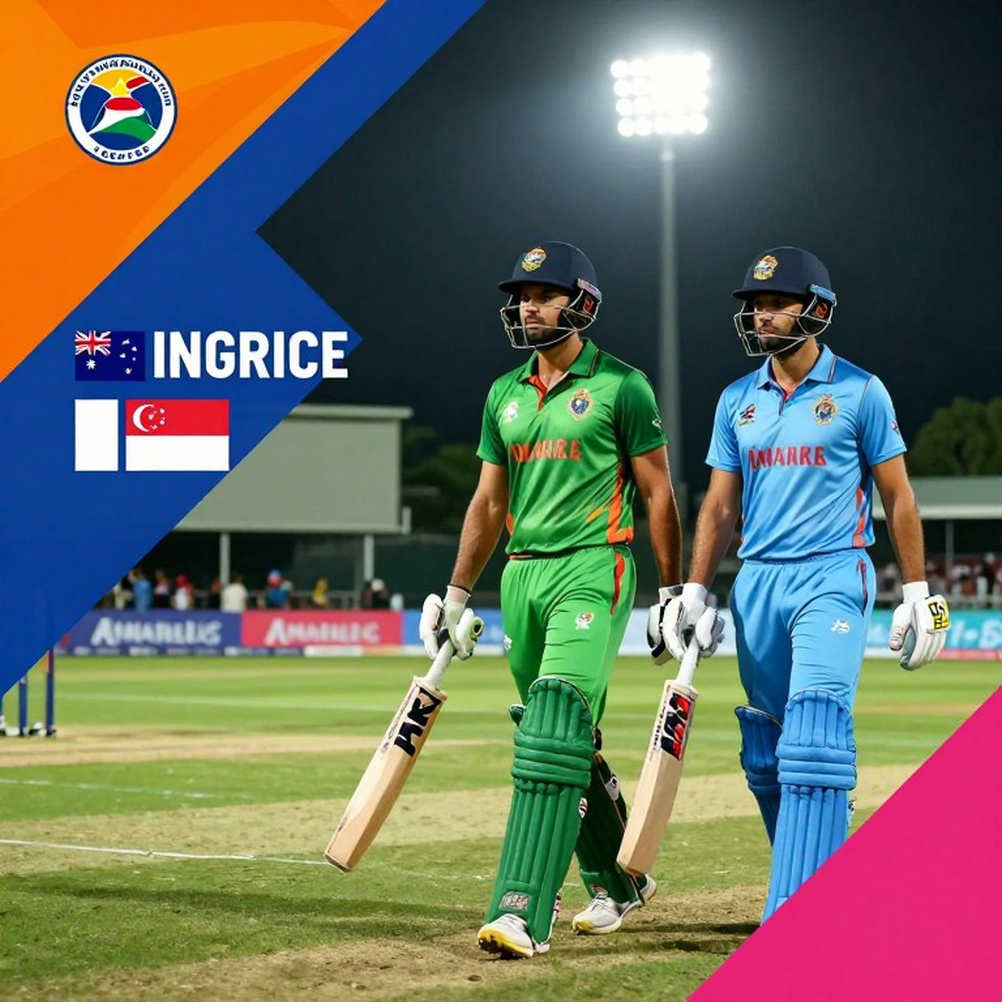
A second point is that he sustained the aggression throughout. Seventeen boundary balls across 99 deliveries is roughly 17 percent — this was not a late-overs explosion but pressure applied from the start.
The 12th hundred: longevity, not peak
This was Fakhar Zaman's 12th ODI century. A double-digit ODI hundred count is a signal of sustained multi-year output in the format. Within Pakistani cricket, it places him in a small group of batters with that kind of longevity.
But it should not be read as proof that he is at his career peak. A 12th hundred tells you he remains capable of high-level output; it does not tell you he is at his highest point. On normal age-curve logic, a batter born in the early 1990s is plausibly in the back half of his peak window. That is inference, not recorded fact — his birth date and age data are not in the available information.
The practical implication is that his value to Pakistan is likely to become increasingly format-specific — ODI and T20 powerplay and middle-overs aggression — rather than a long-innings anchoring role.
Saad Baig: 74 runs that say more than the numbers
If any innings in this match was the most informative, it was not Fakhar's but Saad Baig's. 74 off 75 balls — a strike rate of about 98.7 — and the first ODI half-century of his career.
The importance of that innings lies not in the numbers but in the situation. The team had already lost two early wickets. There was no contribution from the top order. For a less experienced batter to score at roughly a run a ball in that position — neither too slow nor recklessly risky — is a signal of both temperament and format awareness. This is the "partner who holds an end" template that helps a team rebuild without wasting deliveries.
The biggest caution, however, is essential here. One innings does not establish a player's ceiling. This innings came in home conditions, there is no information on the quality of the bowling, and there is nothing in this report about how he will fare away from home or against quality spin. Treat it as a promising data point, not a trend.
The partnership shape: a one-dimensional innings
The Fakhar–Baig stand held Pakistan's innings together, but its shape is itself a signal. A batter taking 63 percent of his runs in boundaries at one end, a partner scoring at a run a ball at the other — that means the team's run production depended heavily on a single batter's timing.
Such a partnership concentrates risk. Had the aggressor been dismissed at any point, the innings' rate could have dropped sharply, forcing a new batter to take on a high required rate. Nothing in the available information indicates whether that happened.
Babar Azam's duck: one innings is not a verdict
Babar Azam was dismissed for zero. That is a fact and it should stay one. Every experienced batter has ducks; calling one duck a form crisis is the textbook small-sample trap that media falls into repeatedly. This report contains no recent form data, no home/away splits, no ball-by-ball breakdown by bowling type, so any conclusion would be speculation.
Maaz Sadaqat's 5 runs should be handled the same way. It says nothing about his ability; it only says he did not succeed in this innings.
230/5 after 36.5 overs: what is known and what is not
According to the report, Pakistan were 230/5 after 36.5 overs. That figure is an information gap, not a result. In a 50-over format, 13.1 overs remained.
It is impossible to determine from this whether the chase was comfortable or tight, for a very simple reason: no target is stated. The word "daunting" that appears in the report is the author's framing, not a number. The final total, the margin of victory, the balls remaining, and whether the lower order was exposed are all outside the available information.
One more thing must be added here: the report also records that both set batters were dismissed. So at the moment captured by the snapshot, Pakistan had lost both of their settled batters and were 230/5. What happened across the remaining 13.1 overs is not described.
The gap between headline and body
The most notable feature of this report is that its headline and its body are saying different things. The headline states that Pakistan clinched the series — the outcome is settled. The body stops at 230/5 after 36.5 overs — the process is truncated.
This usually happens for one of two reasons. Either it was a live-report page that received a new headline after the result but whose body text was never updated, or it is a text extracted from a mid-innings snapshot. Both share one consequence: a reader working only from the body cannot reconstruct how the chase finished.
This is not merely an editorial flaw; it is an analytical problem. Any claim that this was a "dominant" win rests on the headline, not on data. That is why this report deliberately makes no reference to the margin of victory, the balls remaining, or any lower-order examination.
The real signal: top-order fragility
If only one conclusion is to be drawn from this match, it is not the win but the instability of the top order. A host side that needed a 128-strike-rate hundred and a maiden fifty to cover 5 runs from its top three is not a balanced batting unit — it is showing structural dependency.
The distinction matters. "Our batters delivered on all fronts" and "two of our batters rescued the innings" are very different statements, and the details of the match report support the second.
This is not a criticism of any player. It is simply an indication that a win achieved in home conditions can still carry a warning inside it — and that warning is easily suppressed in the celebrations.
The team picture: a side in transition
Two eras appeared side by side in this Pakistan innings. On one hand a veteran striking his 12th ODI hundred; on the other a new face striking his maiden half-century. In cricket this is the textbook picture of transition: a senior player carrying an innings while a less experienced one accumulates international experience alongside him.
That is a positive signal, but not an unconditional one. It is healthy only if the younger players are being given defined roles. If they are appearing purely as injury cover, the same picture describes mismanagement rather than transition. Nothing in the available information establishes which is true — there are no cap numbers, no selection policy details, no team-composition data.
An important limitation must also be recorded on the bowling side. This entire report contains no Pakistan bowler's name, figures, or role. The reason is simple: the available breakdown is batting-focused. No conclusion about the bowling combination, its depth, or its function is possible.
Home conditions: the biggest hidden factor
Every data point in this match was produced in Lahore. That is a limitation that must be attached to every conclusion. Home ground does not only mean a familiar pitch; it means crowd support, absence of travel fatigue, and familiarity with conditions.
The direct consequence is that these numbers should not be merged with any away performance. Saad Baig's 74 came in home conditions; how he fares on overseas tours is a separate question this report cannot answer. Likewise, the interpretation of Fakhar Zaman's 63 percent boundary reliance will change with the type of surface.
Hosting: a bigger achievement than the trophy
If there is one thing in this series that will matter over the long term, it is not the trophy but the hosting. Staging and completing multi-nation international cricket in Pakistan is the asset — it is what opens broadcast inventory, ticketing, and sponsorship.
The restoration of international cricket in Pakistan has been a long and difficult process. Against that backdrop, a team like Sri Lanka playing in Lahore and the series concluding without disruption are both signals of organisational capacity.
It should also be stated clearly that this report contains no reference to any security, logistics, or organisational problem. That is a clean baseline. It should equally be recorded that the risk of a security or logistics incident at a home multi-nation event exists structurally — even where this match shows no sign of one.
The commercial side: no data
No figures on this series' broadcast rights value, sponsorship, ticketing revenue, or audience numbers appear in the available information. Any conclusion in that direction should therefore be avoided.
One theoretical point can be made: the commercial value of international cricket attaches to hosting capacity, not to a single result. A tri-series title does not move broadcast valuations; sustained home hosting does.
It is also worth avoiding a common analytical error. International silverware should not be mapped onto franchise-league market value. A tri-series title carries no auction value, no retention implication, and no salary-cap signalling.
Rules and governance: no controversy
This report contains no rule-level controversy at any point. No DRS dispute, no DLS target revision, no over-rate sanction, no code-of-conduct breach.
That is significant in itself. Cricket reporting tends to be driven by controversy; a clean, dispute-free match report provides a baseline on which other conclusions can be built.
There is no adverse integrity signal either — no reference to match-fixing or betting. It is also worth noting that the absence of any weather or rain reference suggests the match was played without interruption, since a rain-affected game would almost certainly have referenced a revised target. That is inference, not recorded fact.
The risk picture
Three categories cover the risks attached to this match.
The sporting risk sits at the highest level. Dependence of the top order on a single senior batter was demonstrated within this match itself — two of the top three contributed 5 runs between them. The level is high, the likelihood is high because it has already occurred, and the impact is high.
The second sporting risk is over-reaction to Saad Baig's 74. One home innings against bowling of unknown quality cannot justify expanding a player's role. Its level is medium, but the likelihood is high because media and fans reach conclusions quickly.
The third risk is home-condition inflation of performance data. Every figure in this match was produced in Lahore; merging it with away data would be an analytical error.
The fourth risk is narrative — the gap between headline and body. If a reader takes only the headline and concludes that Pakistan's batting is fully settled, they will miss the actual picture.
The overall risk rating is medium, and it is driven almost entirely by the sporting dimension. Nothing in the commercial, integrity, or governance dimensions raises it.
Public narrative: fortress, veteran, new star
The narrative forming around this win rests on three elements: a home fortress, a veteran's performance, and the emergence of a new star.
On Fakhar Zaman the narrative is directionally fair. A 12th ODI century is a verifiable milestone, and a hundred struck at 128.3 in that situation was genuinely high-level output. Here the gap between market expectation and objective assessment is small.
But the narrative runs ahead of the evidence on the claim that the batting "delivered on all fronts". Against a top order dismissed for 5 and zero, that claim does not hold.
On Saad Baig the narrative is ahead of the evidence. A maiden fifty in one home innings is a promising signal, but the historical conversion rate from such performances to durable international output is low. Away samples and quality-bowling samples are needed before the storyline should be treated as settled.
On sentiment, home crowds in Lahore and a century-plus chase represent the highest-arousal ODI outcome available to a home audience. But specific indicators — ticketing, jersey sales, social-media spikes — are absent. Nor are there negative signals: no booing, no criticism, no backlash over selection.
Overall there is a moderate gap between sentiment and fundamentals. The result is real; the inferred conclusion that Pakistan's batting is now settled is not supported by the data.
Industry transmission
The most meaningful transmission from this result is upstream — experience moving into the talent pipeline. Giving two less-established players international exposure in a home ODI series is how a national pipeline accumulates data. That is a longer-horizon benefit than the trophy itself.
At the midstream level — national team and series — the impact is clear: a home title whose value lies mainly in organisational capacity and audience engagement.
Downstream, in broadcast and commercial markets, the impact is marginal and unquantifiable. One tri-series result does not shift broadcast valuations. No conclusion is drawn regarding betting or fantasy sports, because the available information provides no basis for one.
What to watch next
The first signal worth tracking is the aggregate contribution of Pakistan's top three across the next five ODIs. If it stays below roughly 60 percent of the team's total runs, that will confirm top-order fragility as structural rather than a one-off.
The second signal is Saad Baig's away record. If his strike rate falls below roughly 75 overseas, he should be reclassified as a home-condition beneficiary rather than a permanent solution.
The third signal is Fakhar Zaman's scoring profile on slower surfaces. If his boundary share falls below roughly 45 percent with no rotation uplift, that will indicate surface dependence or a decline phase.
The fourth signal is the performance of Pakistan's bowling unit, which does not appear in this report at all. If future series repeatedly show the batting bailing out the bowling, the centre of dependency will have shifted.
The fifth signal is whether this match was the final or a league fixture. If it was the final, that would support the inference that Pakistan fielded a first-choice XI.
Glossary
ODI: a 50-over-per-side format, sitting between Test and T20 in tempo and skill demands.
Tri-series: a short multi-nation tournament, usually three teams playing a round-robin and a final.
Batting strike rate: runs scored per 100 balls faced. 128.3 here means 127 runs from 99 balls.
Boundary share: the percentage of a batter's runs coming from fours and sixes — a proxy for boundary dependency and risk profile.
Maiden fifty / maiden century: a player's first half-century or hundred in that format.
Duck: dismissal without scoring.
Anchor: a batter who holds an end, prioritising preservation over scoring rate.
Required run rate: the per-over scoring rate a chasing side needs — the decisive metric for assessing a chase, and unavailable in this report.
DLS (Duckworth-Lewis-Stern): the standard method for revising targets after rain interruptions — not referenced in this report.
Powerplay: the fielding-restriction phase of an innings.
Death overs: the closing overs of an innings, when scoring accelerates.
ACU: the ICC Anti-Corruption Unit, responsible for integrity monitoring.
ICC / PCB: the global governing body / the Pakistan Cricket Board.
Data note
All figures in this report are based on the available match details. The following information is not present in that material and has therefore not been estimated here: the match target, the margin of victory, the balls remaining, the toss result, weather and pitch reports, Pakistan's bowling figures, details of Sri Lanka's innings, the date of the match, and whether the fixture was the series final or a league match. Career splits for Fakhar Zaman and Saad Baig (home/away, against pace and spin), their exact ages, and their cap numbers are also unverified.
This report is provided for sports-information and analytical reference only. It does not constitute betting advice or a prediction. Sporting outcomes carry high uncertainty, and several conclusions above are constrained by incomplete information and should be re-tested once a full scorecard is available.